
 Alexandria Wyckoff

Shoulder pain can be a nuisance, especially when you’re bench pressing at the gym. A well-known feeling for many athletes, there is a way to lessen or alleviate that pain while still doing the exercises you enjoy. By adapting this five-step approach, you can eliminate that pesky shoulder pain and create a safer, pain-free workout routine.
1. Lock 3 Shoulder Routine

The five-step routine was created by Dr. Andrew Lock and focuses on light weights and posterior shoulder muscles that are often weakened by pressing motions. His workout targets the critical rotator cuff and scapular stabilizers through three different positions. Each one prioritizes slow, controlled movements, so that balance is restored between the front and back shoulder muscles, lessening the overall shoulder pain.
2. Foam Roller External Rotation Drill

The next exercise you’ll want to try out is the foam roller external rotation drill. It mimics bench press arm positioning to target the lateral shoulder stability. You’ll want to elevate your elbow on a foam roller and do slight rotations with a light weight. This movement helps with proper scapular positioning and minimizing joint compensation. Make sure to control the range of motion, though, to prevent further shoulder pain.
3. Banded Bench Press
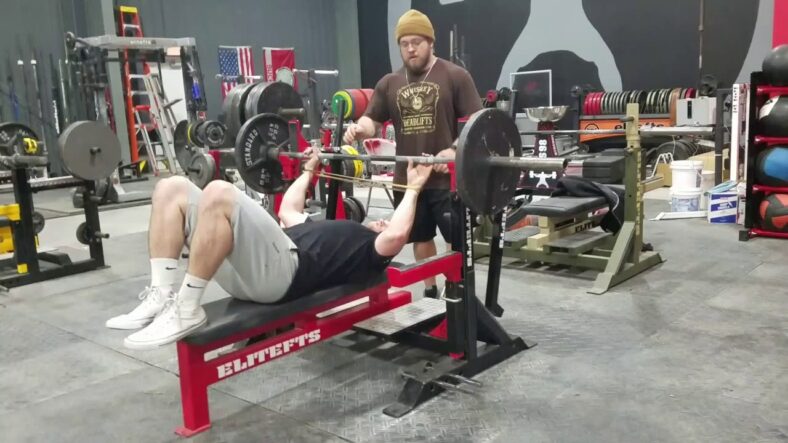
Add another element to your normal bench press through bands. Loop a resistance band around your wrists while doing your normal bench presses. This will keep a constant lateral tension on your shoulders and foster active shoulder stabilization. While doing this exercise, be aware of the slow eccentric and concentric phases; arm shaking means the muscles are activating correctly. They should also be pain-free. If you get shoulder pain, it might be due to incorrect positioning.
4. Upside-Down Kettlebell Bench Press
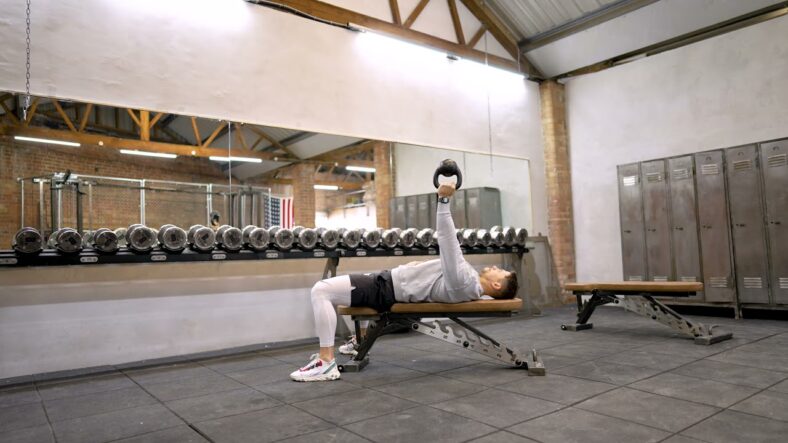
Flip that kettlebell upside down for the next step to eliminate shoulder pain. Each rep combines core bracing, upper back engagement, and shoulder stability, leading to a great full-body workout. This move can also tell you more about that shoulder pain. If you can press a lot of weight but struggle with this move, it could be a joint control deficit or an issue that is causing the pain. If you can master this exercise, it means you can increase your bench press without causing additional pain.
5. Tempo Bench Pressing

When tempo bench pressing, you’ll want to focus on upper back engagement that features slow controlled descents and explosive pressing. Make sure to also pull your shoulder blades down and back. Not only will this help with the shoulder pain, but reveal any technical flaws in your form and lessen the risk of overload. This is a frequent issue when it comes to muscle pain.
Final Thoughts

These five steps are a great warmup for your workout routine, lasting around 15-20 minutes, depending on how many of them you complete. The main importance of these workouts is correcting any form issues and strengthening the muscles so they do not cause further pain. If you do struggle with shoulder pain, lessen your training loads and use these exercises to recover and rehabilitate your shoulder. The next time you get a twinge in your shoulder, add one of these steps to your daily routine.